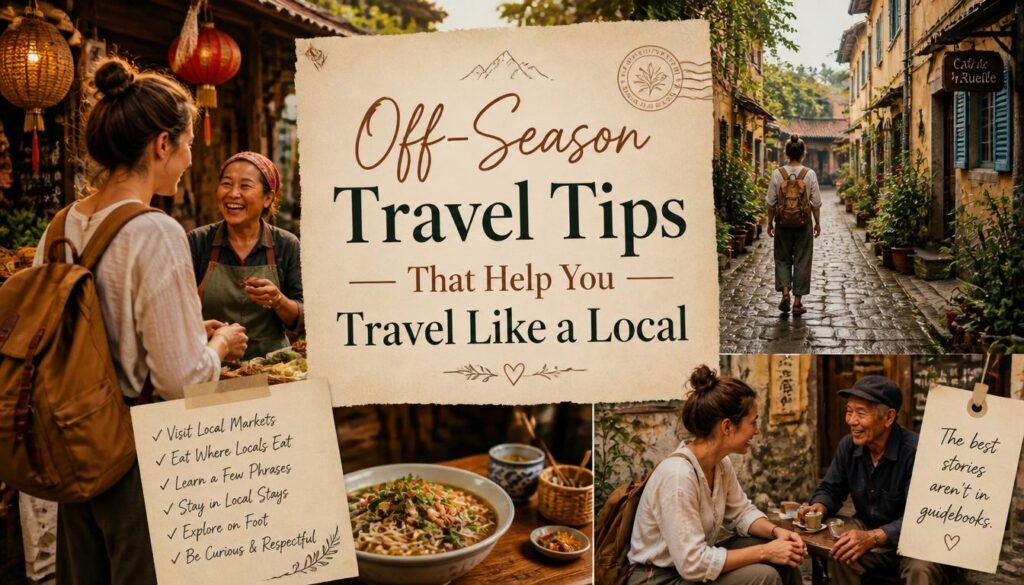
If you have ever stood in a two hour line under a melting summer sun just to take a blurry picture of a historic fountain while an aggressive selfie stick repeatedly pokes you in the ear, you have experienced the absolute tragedy of peak season travel. I used to think that traveling meant fighting through crowds of identical tourists, eating overpriced, stale pizza at cafes with English menus, and paying the equivalent of a small mortgage for a basic hotel room. Then, I accidentally booked a trip to a major coastal European city in the absolute dead of winter because I mixed up my calendar dates. That single mistake completely rewrote my entire philosophy on exploring the planet.
The Economics of Off-Peak Exploration:
Let us be completely honest about the biggest perk of avoiding the crowds: the sheer amount of cash that stays inside your wallet. During peak summer windows, the travel industry operates on pure corporate greed. Airlines jack up flight prices to astronomical heights, and standard hotels charge premium luxury rates for rooms that smell faintly of old carpet. The moment the calendar flips into the off-season, the entire supply-and-demand dynamic completely flips in your favor.
I have watched waterfront boutique hotels drop their nightly rates by more than seventy percent the exact week the official tourist season ends. This massive price drop completely changes how you can allocate your travel budget. Instead of crashing in a cramped, noisy hostel dormitory just to survive financially, you can comfortably afford a spacious, historic apartment in the center of the city. Airlines also become desperate to fill empty airplane seats, resulting in massive flash sales where long-haul international flights cost less than a basic domestic train ticket.
| Expense Category | Peak Season Reality | Off-Season Reality | Local Advantage |
| Boutique Lodging | $300+ per night, fully booked | $80 to $100 per night | Access to historic, residential neighborhoods |
| Airfare Costs | Premium dynamic pricing, zero sales | 50% to 70% discounts, frequent flash sales | Quieter cabins, faster airport transit lines |
| Dining Budgets | Inflated tourist menu pricing | Standard neighborhood market rates | Authentic regional dishes, zero tourist tax |
| Activity Fees | Scalped tickets, massive booking surcharges | Regular entry fees, free neighborhood events | No advance reservations required for top sites |
This financial relief extends directly into your daily expenses on the ground. When a neighborhood is not flooded with millions of transient visitors, the local businesses return to their standard consumer pricing. You stop paying the invisible “tourist tax” that is tacked onto every cup of coffee, taxi ride, and plate of pasta near major landmarks. You can wander three blocks away from the main square and pay the exact same price for a multi-course dinner that a local schoolteacher or mechanic pays on their lunch break.
Cracking the Local Social Code:
When a destination is completely overwhelmed by peak-season tourism, the relationship between the local population and the visitors becomes deeply strained and transactional. Front desk clerks are completely exhausted, restaurant servers are rushing to flip tables as fast as humanly possible, and residents are just trying to navigate their daily commute through an absolute sea of slow-moving tour groups. In that chaotic environment, having a genuine, meaningful interaction with a resident is practically impossible.
The moment the crowds leave, the entire atmosphere of the community shifts from defensive to welcoming. I remember sitting in a tiny neighborhood tavern during a damp, chilly November afternoon. During July, that specific tavern would have been packed to the door with loud tourists demanding burgers.
Instead, the room was filled with old men playing cards and the owner chatting comfortably behind the counter. Because I was the only outsider in the room, the owner walked over, struck up a conversation, and ended up sharing a glass of homemade regional liquor while explaining the fascinating history of the neighborhood.
When you travel off-peak, you are no longer viewed as part of an invasive wave of overtourism that is driving up local rents and crowding out public transit. Residents see your presence during the quiet months as a genuine sign of interest in their home culture.
They become incredibly eager to share their favorite hidden spots, the quiet parks where they take their kids, and the unmarked bakeries that make the absolute best regional pastries. You transition from a passive observer staring at monuments to an active participant experiencing the natural, unscripted rhythm of the destination.
Navigating Weather Realities with Local Wisdom:
The most common excuse people use to avoid off-season travel is the unpredictable or less-than-perfect weather. They are absolutely terrified of a little rain, a crisp winter breeze, or a humid afternoon. But here is the ultimate secret: the local population does not hide indoors or freeze their lives in place just because the seasons change. They simply adapt their routines, clothing, and food choices to match the climate perfectly, and learning to do the same is exactly how you unlock the most authentic version of their lifestyle.
If you visit a tropical region during its notorious “green season,” you quickly realize that the rain rarely falls continuously all day. It usually arrives in a dramatic, predictable two-hour downpour every afternoon. The locals know exactly how to time this cycle.
When the skies darken, they duck into neighborhood markets, long lunches, or historic libraries to wait out the storm. The rain completely clears out the dusty air, lowers the temperature, and turns the surrounding landscapes into an incredibly vibrant, neon-green paradise that peak-season summer travelers never get to witness.
| Climate Type | Off-Season Weather Event | The Tourist Mistake | The Local Strategy |
| Mediterranean / European | Crisp winter chill, overcast skies | Staying indoors, complaining about gray weather | Cozying up in heated taverns, ordering heavy stews |
| Tropical / Maritime | Afternoon monsoon, high humidity | Canceling outdoor excursions entirely | Timing trips around morning sun, enjoying lush nature |
| Nordic / Alpine | Sub-zero temperatures, heavy snow | Avoiding the region due to freezing conditions | Embracing outdoor winter sports, soaking in hot springs |
| Arid / Desert | Intense daytime winter sun, cold nights | Packing light summer clothing only | Layering with heavy wools, exploring dunes at dawn |
In colder northern climates, the arrival of winter triggers a beautiful shift toward interior warmth, rich comfort foods, and community gatherings. Instead of sweating through a crowded outdoor line, you spend your afternoons ducking into cozy, candlelit cafes, browsing independent bookstores without being shoved, and sampling hearty seasonal stews that are specifically designed to warm you from the inside out. You learn the true meaning of regional comfort concepts that cannot be replicated during the blazing heat of a crowded summer vacation.
Dismantling the Blueprint of Tourist Activities:
To truly move through a destination like a local during the off-season, you must completely throw away the standard checklist of generic tourist sights. When the massive crowds disappear, the entire infrastructure that caters exclusively to tourists completely shuts down. The tacky souvenir shops close their shutters, the annoying hop-on-hop-off buses cut their schedules, and the aggressive tour barkers vanish from the sidewalks. This shutdown is not a disadvantage; it is an absolute blessing because it forces you to look at the community through a normal residential lens.
Instead of booking an organized, overpriced group tour to a historical monument, you take the public commuter bus or train alongside residents heading to work. You stop starting your mornings at international coffee chains and instead find the tiny corner espresso bar where people stand at the counter, debate the morning news, and pay a fraction of a dollar for a perfect shot of caffeine.
Your primary afternoon activity shifts from standing in massive lines to wandering through thriving neighborhood food markets where residents do their actual grocery shopping. You watch older women inspect fresh produce, listen to the loud banter of local fishmongers, and discover incredible regional cheeses, cured meats, and fresh breads for a few dollars. Bringing these fresh ingredients back to a rented apartment kitchen to cook your own regional dinner provides a profound, grounded sense of connection to the land that no luxury hotel restaurant can ever match.
Embracing the Art of Slow Travel:
Peak-season travel encourages a highly toxic, frantic mentality where you feel constant pressure to sprint from one landmark to the next to justify the absurd amount of money you spent on the trip. You are constantly looking at your watch, fighting through angry crowds, and checking items off a superficial bucket list just to post them on social media. It is exhausting, stressful, and fundamentally hollow.
The off-season naturally forces you to embrace the beautiful philosophy of slow travel. Because there are no massive lines to fight through and no sold-out museum tickets to stress over, your entire daily schedule completely decompresses. You can spend an entire rainy morning sitting by a window in an old library, reading a book, and listening to the patter of drops against ancient stone walls. You can spend hours walking through empty museum galleries, standing completely alone in front of world-class masterpieces without an aggressive security guard telling you to keep moving.
| Travel Philosophy Element | Peak-Season Frantic Model | Off-Season Slow Model |
| Daily Itinerary Structure | Rigidly timed schedules, pre-booked entry windows | Open, flexible days guided by mood and weather |
| landmark Engagement | Brief, rushed viewing over a wall of selfie sticks | Deep, uninterrupted reflection in empty galleries |
| Transportation Style | Overpriced private transfers, chaotic tourist shuttles | Slow, highly observant journeys on public neighborhood lines |
| Cultural Intake Goal | Maximizing the total volume of sights photographed | Deepening the quality of a few meaningful encounters |
This unhurried pacing allows your mind to settle, observe, and actually process the subtle details of the world around you. You start noticing the unique architectural details of the residential buildings, the specific style of coats the locals wear, the cadence of the language spoken on the street, and the beautiful daily rituals that make the destination completely unique. You stop treating the country like a backdrop for your vacation photos and start understanding it as a complex, living home to millions of real human beings.
Cultural Immersion and Seasonal Festivals:
One of the greatest rewards of off-peak travel is the unique opportunity to witness authentic cultural events and seasonal festivals that are created purely by the local community, for the local community. During the chaotic summer months, any public festival is quickly swamped by international tourists, transforming a sacred or historic tradition into an commercialized spectacle. The moment the tourism season clears out, the festivals that take place are intensely local, deeply traditional, and completely unvarnished.
I have joined neighborhood candlelit processions through winding alpine villages in January, stood in the freezing rain to watch ancient fire festivals, and shared communal tables at tiny countryside harvest celebrations where I was the only non-native speaker in attendance.
The hospitality you experience at these off-season events is genuinely staggering. Because you are not part of an overwhelming wave of tourists, the organizers and families treat you like an honored guest. They will drag you into their dances, pile your plate high with traditional foods that are never featured on standard restaurant menus, and patiently explain the generations-old folklore behind their rituals.
These raw, unscripted cultural encounters create the kind of powerful, lifelong memories that stay locked in your heart forever. They offer a profound glimpse into the true identity of a culture, completely stripping away the polished, artificial marketing layers created by corporate tourism boards. You return home not just with a collection of generic souvenirs, but with a genuine, empathetic understanding of how a community connects, celebrates, and sustains its identity across the changing seasons of the year.
Summary of the Off-Season Mindset:
Traveling like a local is not about changing your physical location; it is about fundamentally shifting your psychological mindset. It requires you to prioritize depth over speed, authenticity over comfort, and meaningful human connection over superficial sight-seeing. By intentionally choosing to step out into the world during the quiet, unsung months of the year, you escape the exhausting, commercialized tourist matrix. You unlock a world of dramatic financial savings, open and peaceful streets, warm neighborhood hospitality, and rich cultural immersion. Stop fighting the crowds for a generic, stressful summer vacation, embrace the off-season, step to the rhythm of the residents, and discover what it truly means to explore the world.
FAQs:
1. What months are generally considered the universal off-season?
The off-season typically runs from November through February in the Northern Hemisphere, and May through August in the Southern Hemisphere.
2. Will major historical sites and museums be closed during the off-season?
World-class national museums and major landmarks stay open year-round, though they operate on shorter winter hours.
3. How much money can I realistically expect to save by traveling off-peak?
You can easily save fifty to seventy percent on premium accommodations and thirty to fifty percent on international flights.
4. Is it safe to travel to tropical destinations during their rainy green seasons?
Yes, the infrastructure handles the rain perfectly, and storms usually consist of short, highly predictable afternoon downpours.
5. How do I find authentic neighborhood restaurants when tourist spots are closed?
Walk at least three blocks away from major landmarks and look for unpretentious spots crowded with residents.
6. Should I buy all my transit and museum tickets before leaving on my trip?
No, the lack of crowds means you can easily purchase tickets on-site without facing lines or sell-outs.
